
Undergraduates’ career adaptability: a systematic review of predictors, mediators, and outcomes
Article Sidebar
Main Article Content
Abstract
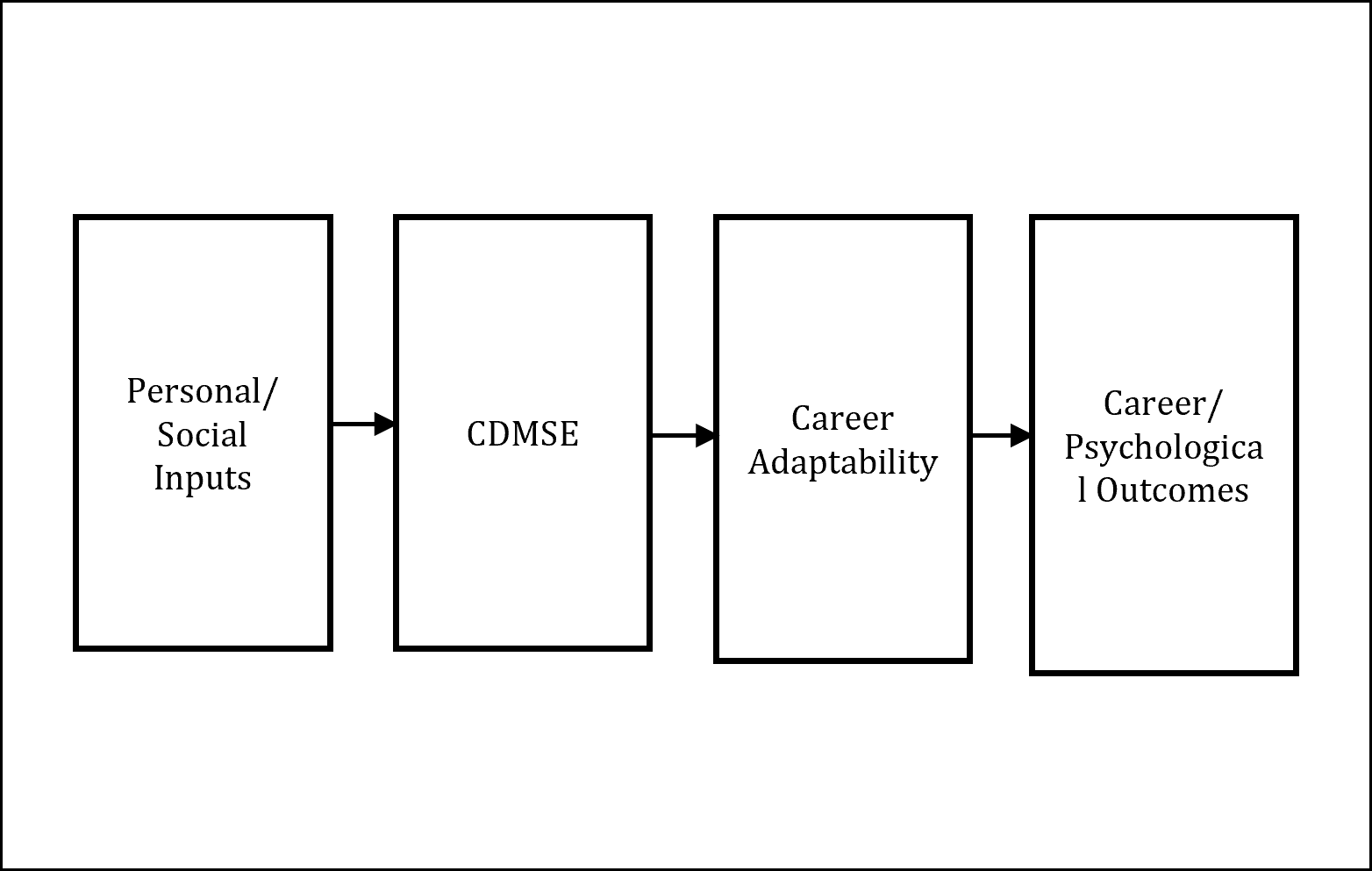
Career adaptability is vital in helping university students transition from education to employment. This research conducts a systematic literature review to compile recent empirical studies on the factors influencing, mediating, and resulting from career adaptability among university students. The review includes 33 studies published between 2020 and 2025, featuring a range of geographical contexts and research methods. Key predictors identified include personality traits, contextual influences, and career-related skills. Additionally, mediating factors like resilience, self-efficacy, and challenges in career decision-making are explored, which affect the relationship between career adaptability and outcomes such as career planning, employability, and mental well-being. This study emphasises the need to cultivate adaptive career skills through educational programs and tailored support systems. Nonetheless, it acknowledges limitations, including the prevalence of cross-sectional studies and a shortage of longitudinal research. Future studies should investigate the evolving nature of career adaptability and its impact on non-traditional career paths. These insights are beneficial for educators, policymakers, and career advisors aiming to improve career readiness among students.
Article Details

This work is licensed under a Creative Commons Attribution-NonCommercial-NoDerivatives 4.0 International License.
References
Abelha, M., Fernandes, S., Mesquita, D., Seabra, F., & Ferreira-Oliveira, A. T. (2020). Graduate employability and competence development in higher education - a systematic literature review using PRISMA. Sustainability, 12(15), 5900. https://doi.org/10.3390/su12155900
Ambiel, R. A. M., & de Oliveira Barros, L. (2022). Mediating effect of career adaptability in levels of hope, satisfaction and depressive symptomatology in postgraduate students. Estudos de Psicologia (Natal), 27(1), 1-11. http://dx.doi.org/10.22491/1678-4669.20220001
Buyukgoze-Kavas, A., Duffy, R. D., & Douglass, R. P. (2015). Exploring links between career adaptability, work volition, and well-being among Turkish students. Journal of Vocational Behavior, 90, 122-131. https://doi.org/10.1016/j.jvb.2015.08.006
Chen, H., Pang, L., Liu, F., Fang, T., & Wen, Y. (2022). "Be perfect in every respect": the mediating role of career adaptability in the relationship between perfectionism and career decision-making difficulties of college students. BMC psychology, 10(1), 137. https://doi.org/10.1186/s40359-022-00845-1
Chiesa, R., Antonio, A. A., Guglielmi, D., Mariani, M. G., & Mazzetti, G. (2024). Young adults' career goal management: the mediating role of perceived employability and career adaptability. Australian Journal of Career Development, 33(1), 36-45. http://doi.org/10.1177/10384162231226079
Chong, S., & Leong, F. T. (2017). Antecedents of career adaptability in strategic career management. Journal of Career Assessment, 25(2), 268-280. https://doi.org/10.1177/1069072715621522
Chui, H., Li, H., & Ngo, H. Y. (2022). Linking protean career orientation with career optimism: Career adaptability and career decision self-efficacy as mediators. Journal of Career Development, 49(1), 161-173. https://doi.org/10.1177/0894845320912526
Creed, P., Prideaux, L. A., & Patton, W. (2005). Antecedents and consequences of career decisional states in adolescence. Journal of Vocational Behavior, 67(3), 397-412. https://doi.org/10.1016/j.jvb.2004.08.008
de Abreu, N., Kleynhans, R., & Nel, P. (2024). Vocational identity as a mediator in the relationship between mindfulness and career adaptability among graduates in the early career stage. British Journal of Guidance & Counselling, 52(3), 431-441. https://doi.org/10.1080/03069885.2022.2106549
Du, B., Wang, J., Qian, Y., & Cheng, J. (2024). Factors influencing career adaptation: the positive effects of mastery goal orientation, social support, and vocational decision self efficacy. Journal of Infrastructure, Policy and Development, 8(8), 8399. http://dx.doi.org/10.24294/jipd.v8i8.8399
Duffy, R. D. (2010). Sense of control and career adaptability among undergraduate students. Journal of Career Assessment, 18(4), 420-430. https://doi.org/10.1177/1069072710374587
Ebberwein, C. A., Krieshok, T. S., Ulven, J. C., & Prosser, E. C. (2004). Voices in transition: lessons on career adaptability. The Career Development Quarterly, 52(4), 292-308. https://doi.org/10.1002/j.2161-0045.2004.tb00947.x
Fu, C., Cai, Y., Yang, Q., Pan, G., Xu, D., & Shi, W. (2023). Career adaptability development in the school-to-work transition. Journal of Career Assessment, 31(3), 476-492. https://doi.org/10.1177/10690727221120366
Gao, L., Li, Y., & Pang, W. (2025). Career adaptability and graduates' mental health: the mediating role of occupational future time perspective in higher education in China. BMC psychology, 13(1), 158. https://doi.org/10.1186/s40359-025-02433-5
Goodman, J. M. (1994). Career adaptability in adults: a construct whose time has come. Career Development Quarterly, 43(1), 74-84. https://doi.org/10.1002/j.2161-0045.1994.tb00848.x
Hai, L., Bao, X., Wang, Y., Zhang, M., & Shu, M. (2024). Examining family atmosphere and school climate within psychology of working theory among chinese rural college students. Behavioral Sciences, 14(12), 1151. https://doi.org/10.3390/bs14121151
Hamzah, S. R. A., Kai Le, K., & Musa, S. N. S. (2021). The mediating role of career decision self-efficacy on the relationship of career emotional intelligence and self-esteem with career adaptability among university students. International Journal of Adolescence and Youth, 26(1), 83-93. https://doi.org/10.1080/02673843.2021.1886952
Hartung, P. J., Porfeli, E. J., & Vondracek, F. W. (2008). Career adaptability in childhood. Career Development Quarterly, 57(1), 63-74. https://doi.org/10.1002/j.2161-0045.2008.tb00166.x
He, M., & Yu, Y. (2022). Individual risky and protective factors influencing university new graduates' career adaptability during COVID-19: a moderated mediation model. Journal of Health Psychology, 27(11), 2632-2643. https://doi.org/10.1177/13591053211064980
Hurtado, S., Han, J. C., Saenz, V. B., Espinosa, L. L., Cabrera, N. L., & Cerna, O. S. (2007). Predicting transition and adjustment to college: Biomedical and behavioral science aspirants' and minority students' first year of college. Research in Higher Education, 48, 841-887. https://doi.org/10.1007/s11162-007-9051-x
Kerr, S., Johnson, V. K., Gans, S. E., & Krumrine, J. (2004). Predicting adjustment during the transition to college: Alexithymia, perceived stress, and psychological symptoms. Journal of College Student Development, 45(6), 593-611. https://doi.org/10.1353/csd.2004.0068
Koen, J., Klehe, U. C., & Van Vianen, A. E. M. (2012). Training career adaptability to facilitate a successful school-to-work transition. Journal of Vocational Behavior, 81(3), 395-408. http://dx.doi.org/10.1016/j.jvb.2012.10.003
Koen, J., Klehe, U. -C., Van Vianen, A. E. M., Zikic, J., & Nauta, A. (2010). Job-search strategies and reemployment quality: the impact of career adaptability. Journal of Vocational Behavior, 77(1), 126-139. https://doi.org/10.1016/j.jvb.2010.02.004
LaGree, D., Tefertiller, A., & Olsen, K. (2021). Preparing mass communications students for an evolving industry: the influence of emotional intelligence and extracurricular involvement on career adaptability. Journalism & Mass Communication Educator, 76(1), 65-77. https://doi.org/10.1177/1077695820924303
Lee, A., & Jung, E. (2022). University students' career adaptability as a mediator between cognitive emotion regulation and career decision-making self-efficacy. Frontiers in Psychology, 13, 896492. https://doi.org/10.3389/fpsyg.2022.896492
Liu, N., & Jew, L. (2023). The impact of social capital on career adaptability in the era of artificial intelligence: the mediating role of career choice. Journal of Logistics, Informatics and Service Science, 10(3), 166-179. http://doi/org/10.33168/JLISS.2023.0313
Lu, L., & Jia, Q. (2022). Do college students with future work self-salience demonstrate higher levels of career adaptability? From a dual perspective of teachers and students. Frontiers in psychology, 13, 1011447. https://doi.org/10.3389/fpsyg.2022.1011447
Ma, Y., Bennett, D., & Chen, S. C. (2023). Perceived organisational support and university students' career exploration: the mediation role of career adaptability. Higher Education Research & Development, 42(4), 903-919. https://doi.org/10.1080/07294360.2022.2115983
Ma, Y., Huang, G., & Autin, K. L. (2021). Linking decent work with academic engagement and satisfaction among first-generation college students: A psychology of working perspective. Journal of Career Assessment, 29(1), 148-163. https://doi.org/10.1177/1069072720943153
Ma, Y., Nimmi, P. M., Mouratidou, M., & Donald, W. E. (2024). Exploring the impact of serious leisure on well-being and self-perceived employability: the mediating role of career adaptability amongst Chinese undergraduates. Higher Education, Skills and Work-Based Learning, 14(6), 1252-1266. http://dx.doi.org/10.1108/HESWBL-12-2023-0346
Marini, M., Livi, S., Prislei, L., Parisse, C., Cecalupo, A., Scarci, F., & Benvenuto, G. (2023). The impact of perceived barriers to career advancement: A study with a sample of Italian university students. Sustainability, 15(11), 8874. https://doi.org/10.3390/su15118874
Mavhungu, D., Barkhuizen, E. N., & Magau, M. (2024). Predicting the career success of Generation Z employees: A socioeconomic perspective. South African Journal of Economic and Management Sciences, 27(1), 5788. https://doi.org/10.4102/sajems.v27i1.5788
Nguyen, N. K., Le, H. Y. P., Nguyen, V. H. A., Nguyen-Duong, B. T., & Thanh, D. T. The relationship between emotional intelligence and career decision-making difficulties: mediation role of career adaptability of university students. Journal of Curriculum and Teaching, 13(2), 67-82. https://doi.org/10.5430/jct.v13n2p67
OECD (2019). OECD Employment Outlook 2019: The Future of Work. https://www.oecd.org/en/publications/oecd-employment-outlook-2019_9ee00155-en.html
Ogunmakinde, O. E., Egbelakin, T., Sher, W., Omotayo, T., & Ogunnusi, M. (2024). Establishing the limitations of sustainable construction in developing countries: a systematic literature review using PRISMA. Smart and Sustainable Built Environment, 13(3), 609-624. https://doi.org/10.1108/SASBE-10-2022-0223
Parmentier, M., Pirsoul, T., & Nils, F. (2022). Career adaptability profiles and their relations with emotional and decision-making correlates among Belgian undergraduate students. Journal of Career Development, 49(4), 934-950. https://doi.org/10.1177/08948453211005553
Petticrew, M., & Roberts, H. (2008). Systematic reviews in the social sciences: A practical guide. John Wiley & Sons. https://doi.org/10.1002/9780470754887
Pong, H. K., & Leung, C. H. (2023a). Cross-sectional study of the relationship between trait emotional intelligence and career adaptability of Chinese youths. BMC Public Health, 23(1), 514. https://doi.org/10.1186/s12889-023-15372-w
Pong, H. K., & Leung, C. H. (2023b). The impacts of community-service learning on career adaptability and on ethics and social responsibility of university students: an experimental study. Journal of Education and Work, 36(4), 251-269. https://doi.org/10.1080/13639080.2023.2174955
Rudolph, C. W., Lavigne, K. N., & Zacher, H. (2017). Career adaptability: A meta-analysis of relationships with measures of adaptivity, adapting responses, and adaptation results. Journal of Vocational Behavior, 98, 17-34. https://doi.org/10.1016/j.jvb.2016.09.002
Sahin, E. E., & Gulsen, F. U. (2022). The mediating role of self leadership in the relationship between basic psychological needs satisfaction, academic self-efficacy and career adaptability of Turkish undergraduates when life satisfaction is controlled. Personality and Individual Differences, 195, 111709. https://doi.org/10.1016/j.paid.2022.111709
Sahoo, P., Saraf, P. K., & Uchil, R. (2024). Identification of critical success factors for leveraging Industry 4.0 technology and research agenda: a systematic literature review using PRISMA protocol. Asia-Pacific Journal of Business Administration, 16(3), 457-481. https://doi.org/10.1108/APJBA-03-2022-0105
Salim, R. M. A., Istiasih, M. R., Rumalutur, N. A., & Situmorang, D. D. B. (2023). The role of career decision self-efficacy as a mediator of peer support on students' career adaptability. Heliyon, 9(4), e14911. https://doi.org/10.1016/j.heliyon.2023.e14911
Savickas, M. L. (1997). Career adaptability: An integrative construct for life-span, life-space theory. The Career Development Quarterly, 45(3), 247-259. https://doi.org/10.1002/j.2161-0045.1997.tb00469.x
Savickas, M. L. (2005). The Theory and Practice of Career Construction. In Brown, S. D. & Lent, R. W. (Eds.), Career development and counseling: Putting theory and research to work (pp. 42-70). John Wiley & Sons, Inc.
Savickas, M. L., & Porfeli, E. J. (2011). Revision of the career maturity inventory: The adaptability form. Journal of Career Assessment, 19(4), 355-374. https://doi.org/10.1177/1069072711409342
Savickas, M. L., & Porfeli, E. J. (2012). Career Adapt-Abilities Scale: Construction, reliability, and measurement equivalence across 13 countries. Journal of Vocational Behavior, 80(3), 661-673. https://doi.org/10.1016/j.jvb.2012.01.011
Savickas, M. L., Porfeli, E. J., Hilton, T. L., & Savickas, S. (2018). The student career construction inventory. Journal of Vocational Behavior, 106, 138-52. https://doi.org/10.1016/j.jvb.2018.01.009
Skorikov, V. (2007). Continuity in adolescent career preparation and its effects on adjustment. Journal of Vocational Behavior, 70(1), 8-24. https://doi.org/10.1016/j.jvb.2006.04.007
Super, D. E., & Knasel, E. G. (1981). Career development in adulthood: Some theoretical problems and a possible solution. British Journal of Guidance and Counselling, 9(2), 194-201. https://doi.org/10.1080/03069888108258214
Ulas-Kilic, O., & Peila-Shuster, J. J. (2023). A test of the career construction theory model of adaptation with Turkish final year undergraduate students. Journal of Career Development, 50(4), 844-859. https://doi.org/10.1177/08948453221129275
Wang, S., Mei, M., Xie, Y., Zhao, Y., & Yang, F. (2021). Proactive personality as a predictor of career adaptability and career growth potential: A view from conservation of resources theory. Frontiers in Psychology, 12, 699461. https://doi.org/10.3389/fpsyg.2021.699461
World Economic Forum. (2023). The future of jobs report 2023. https://www.weforum.org/reports/the-future-of-jobs-report-2023
Zacher, H. (2014). Career adaptability predicts subjective career success above and beyond personality traits and core self-evaluations. Journal of Vocational Behavior, 81(1), 21-30. https://doi.org/10.1016/j.jvb.2013.10.002
Zarate, D., Stavropoulos, V., Ball, M., de Sena Collier, G., & Jacobson, N. C. (2022). Exploring the digital footprint of depression: a PRISMA systematic literature review of the empirical evidence. BMC psychiatry, 22(1), 421. https://doi.org/10.1186/s12888-022-04013-y
Zhang, X., Yu, L., Chen, Y., Fu, Z., Zhang, F., Li, Z., & Wu, Q. (2024). Career adaptability and career coping styles among Chinese medicine specialty students during the COVID-19: The mediating role of career decision-making self-efficacy. Heliyon, 10(15), e34578. https://doi.org/10.1016/j.heliyon.2024.e34578
Zhou, J. (2023). Influence of career decision ambiguity tolerance preference on career adaptability: the role of individual and organizational career management. Psychological Reports, 126(5), 2530-2550. https://doi.org/10.1177/00332941221092648
Zhuang, J., Jiang, Y., & Chen, H. (2021). Stress and career adaptability during COVID-19: A serial multiple mediation model. Social Behavior and Personality: an international journal, 49(8), 1-11. https://doi.org/10.2224/sbp.10551