
Halwa maskat: A sweet legacy and cultural transmission among Malaysian younger generation
Article Sidebar
Main Article Content
Abstract
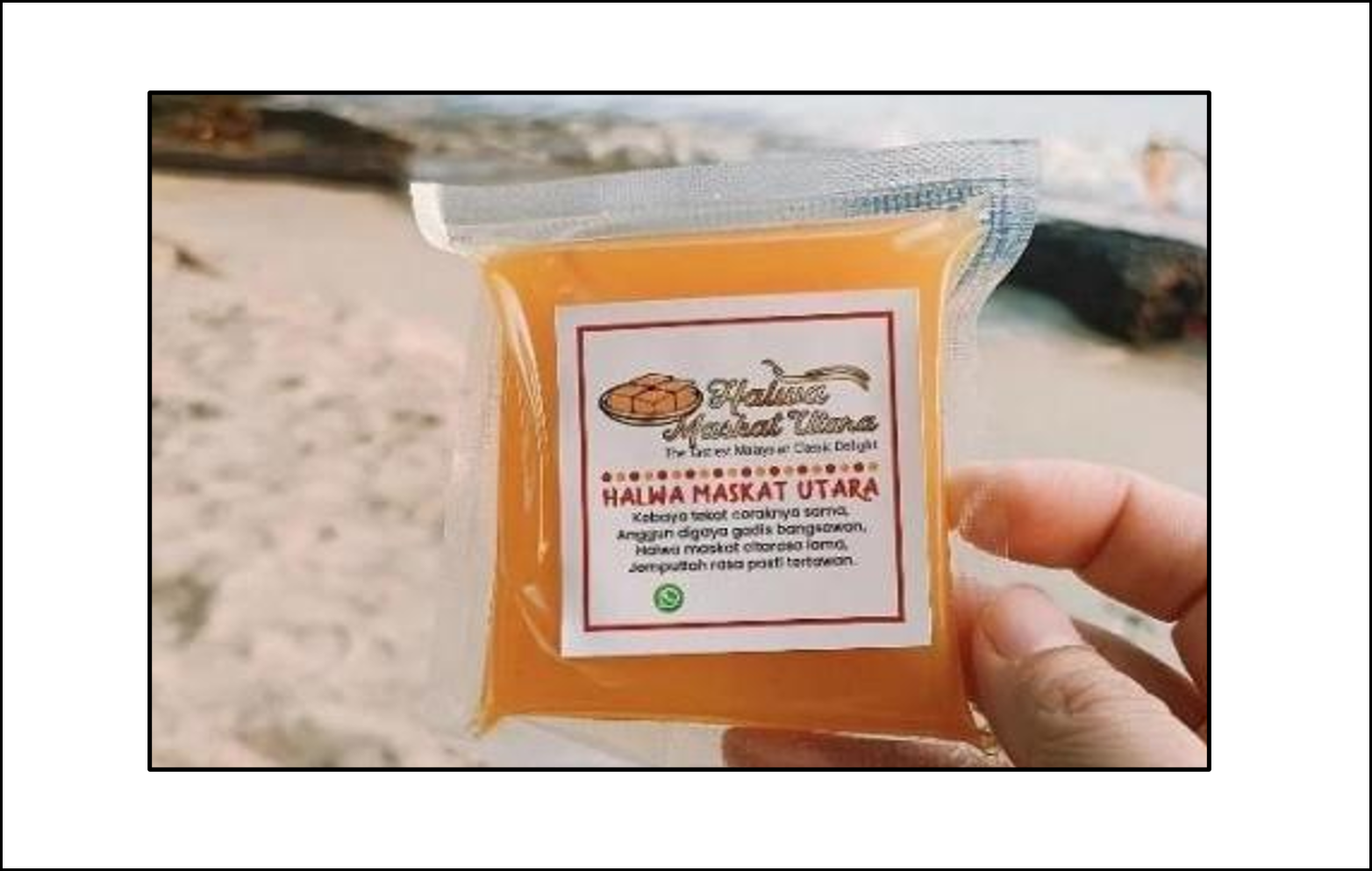
Halwa maskat, originating from Muscat, Oman, has undergone adaptations across different diaspora communities, shaping its unique presence in northern Malaysia. Influenced by Middle Eastern maritime traders who once navigated the Strait of Malacca, this delicacy embodies a deep historical connection between Oman and the Malay world, as documented in Malay, Arab, and Persian sources. Despite its rich heritage, halwa maskat faces declining awareness and consumption among younger generations, placing this traditional dessert at risk of fading into obscurity. This study examines the factors affecting the young generation's knowledge and appreciation of halwa maskat, with a focus on Penaga, Penang, Malaysia. Employing a qualitative, exploratory approach, data was collected from 10 informants through face-to-face and online interviews with halwa maskat makers and young individuals, using a snowball sampling. The process of data collection was iterative. Findings reveal that gaps in cultural transmission, the intricate nature of preparation, and limited ingredient accessibility contribute to the decline in young people's awareness and engagement. These insights highlight the need for targeted efforts in cultural education, simplified preparation methods, and improved ingredient availability to preserve and revitalize this tradition.
Article Details

This work is licensed under a Creative Commons Attribution-NonCommercial-NoDerivatives 4.0 International License.
References
Abdul, H. B., Raj, G., & Chakraborty, S. (2016). Assuring reliability in qualitative studies: a health informatics perspective. PACIS 2016 Proceedings. 394. https://aisel.aisnet.org/pacis2016/394
Aziz, A. R., & Pawi, A. A. A. (2016). Redefining Malay food in the post Malaysia's New Economic Policy (NEP). Journal of Tourism, Hospitality & Culinary Arts (JTHCA), 8(2), 1-9.
Bihari, S. (2023). Cultural heritage and indigenous knowledge: Reviving traditions for future generations. In Dharmasiri, L. M., Saptarshi, P. G., Shinde, S. D., Nadaf, F. M., Bhanje, B. M., More, I. , Tipe, H. B., Samuel, B. A., & Mane, S. P. (Eds). Sustainable Development Goals in SAARC Countries: Key Issues, Opportunities and Challenges, (pp. 24-32). Jyotikiran Publication, Pune
Bouncken, R. B., Czakon, W., & Schmitt, F. (2025). Purposeful sampling and saturation in qualitative research methodologies: recommendations and review. Review of Managerial Science, 20, 579-615 https://doi.org/10.1007/s11846-025-00881-2
Boussaa, D. (2021). The past as a catalyst for cultural sustainability in historic cities; the case of Doha, Qatar. International Journal of Heritage Studies, 27(5), 470-486. https://doi.org/10.1080/13527258.2020.1806098
Campbell, S., Greenwood, M., Prior, S., Shearer, T., Walkem, K., Young, S., Bywaters, D., & Walker, K. (2020). Purposive sampling: complex or simple? Research case examples. Journal of Research in Nursing: JRN, 25(8), 652-661. https://doi.org/10.1177/1744987120927206
Cash, P., Isaksson, O., Maier, A., & Summers, J. (2022). Sampling in design research: Eight key considerations. Design Studies, 78, 101077. https://doi.org/10.1016/j.destud.2021.101077
Enh, A. M., Wahab, A., Azlan, A. A., Talib, K. A., Sakti, A. M. T., & Sultan, F. M. M. (2024). Life experiences and cultural adaptation among migrant workers in Malaysia. Comparative Migration Studies, 12(1), 1.
Fikri, N., Rahman, A. E. A., & Noh, I. (2021). Exploring culinary heritage practices among the younger Chetti generations in Melaka. Journal of Ethnic Foods, 8, 25. https://doi.org/10.1186/s42779-021-00101-8
Guest, G., Namey, E., & Chen, M. (2020). A simple method to assess and report thematic saturation in qualitative research. PLoS ONE, 15(5), e0232076. https://doi.org/10.1371/journal.pone.0232076
Hashim, N. F., Abdull Samat, M. A. A., Ishak, N., & Md Sahak, A. A. (2024). Practice of young generations on traditional Javanese-Malay foods in Selangor. Journal of Tourism, Hospitality & Culinary Arts (JTHCA), 16(2), 185-201.
Hassan, M. (2024). Limitations in research-types, examples and writing guide. ResearchMethod.Net. https://researchmethod.net/limitations-in-research/
Ismail, N., Ab. Karim, M. S., Che Ishak, F. A., et al. (2021). The Malay's traditional sweet, dodol: a review of the Malaysia's heritage delicacy alongside with the rendition of neighbouring countries. Journal of Ethnic Foods, 8, 19. https://doi.org/10.1186/s42779-021-00095-3
Juanis, B., Saleh, Y., Ghazali, M. K. A., Mahat, H., Hashim, M., Nayan, N., Hayati, R., & Kurnia, R. (2022). Knowledge, attitudes and practices of youths towards the intangible cultural heritage elements of Dusun Ethnic in Malaysian Environment. IOP Conference Series: Earth and Environmental Science, 975(1), 012008. https://doi.org/10.1088/1755-1315/975/1/012008
Kamaruzaman, M. Y. B., Karim, S. A., Ishak, F. A. B. C., & Arshad, M. M. B. (2020). The diversity of traditional Malay kuih in Malaysia and its potentials. Journal of Ethnic Foods, 7, 22. https://doi.org/10.1186/s42779-020-00056-2
Karim, L. A. A. (2018, January 12). Usaha pulihara kuih warisan tradisional, elak pupus. Berita Harian, pp. 1-14. https://www.bharian.com.my/bisnes/lain-lain/2018/01/373817/usaha-pulihara-kuih-warisan-tradisional-elak-pupus
Karunarathna, I., Gunasena, P., Hapuarachchi, T., & Gunathilake, S. (2024). Comprehensive data collection: Methods, challenges, and the importance of accuracy. Uva Clinical Research, 10, 95-111.
Majdin, M. F. B. M., Osman, R. A. H., Fathil, F., Yaapar, M. S., & Al Zuhimi, S. (2022). Revisiting Omani legacy in Malaya through The Royal Kedah dress: reassessment. Journal of Islamic Thought and Civilization, 12(1), 48-74. https://doi.org/10.32350/jitc.121.03
Mwita, K. (2022). Factors influencing data saturation in qualitative studies. International Journal of Research in Business and Social Science (2147-4478), 11(4), 414-420. https://doi.org/10.20525/ijrbs.v11i4.1776
Osman, R. A., Yaapar, M. S., Akhmatove, E., Fathil, F., Majdin, M. F. M., Nadri, N., & Alzeheimi, S. (2021). Malaysian-Omani historical and cultural relationship: in context of halwa maskat and baju maskat. International Journal of Heritage, Art and Multimedia, 4(12), 17-27. https://doi.org/10.35631/ijham.412002
Parker, C., Scott, S., & Geddes, A. (2019). Snowball sampling. SAGE Publications.
Rahman, A. F. B., Shariff, F. M., & Bakar, S. K. A. (2022). Makanan tradisi komuniti jawa di Malaysia: Ketewol. In Pelestarian warisan makanan tradisional Melayu, Siri 1 (pp. 190-206). Jabatan Warisan Negara.
Sharif, M. S. M., Zahari, M. S. M., Nor, N. M., & Muhammad, R. (2016). The importance of knowledge transmission and its relation towards the Malay traditional food practice continuity. Procedia - Social and Behavioral Sciences, 222, 567-577. https://doi.org/10.1016/j.sbspro.2016.05.215
Ugwu, C. N., & Eze, V. H. U. (2023). Qualitative research. IDOSR Journal of Computer and Applied Science, 8(1), 20-35.
Zikri, A. (2020, May 14). Raja Permaisuri Agong demonstrates the traditional process of making halwa Maskat. Malay Mail. https://www.malaymail.com/news/life/2020/05/14/raja-permaisuri-agong-demonstrates-the-traditional-process-of-making-halwa/1866107